Burning Man 101: What First-Timers Actually Need to Know
If you’ve ever looked at photos of Burning Man and thought, “That looks insane… but also kind of amazing?” — you’re not alone.
Before going, I had a lot of questions. Is it really that chaotic? Is it impossible to prepare for? Do you need an RV, a massive camp, and a survivalist mindset just to make it through the week?
Short answer: no.
Long answer: it’s absolutely one of the most unique experiences you’ll ever have — but it’s also uncomfortable, unpredictable, and requires more planning than you think.
I drove over 3,000 miles across the country to get there. Camped without a structured theme camp. Packed everything into a small car. Dealt with dust storms, long gate lines, and clay mud that completely shut things down.
And I’d still do it again.
If you’re considering going for the first time, this guide breaks down what actually matters — from tickets and packing to what it really feels like once you’re out on the playa.
No fluff. Just what I wish I knew going in.
This post may contain affiliate links. If you book or purchase through these links, we may earn a small commission at no extra cost to you. Please read our full Affiliate Disclosure for more information.
If I had to do it again, I’d pack lighter — but smarter. I created a no-fluff essentials list based on what actually worked on the playa. No overcomplicated survival gear. Just what matters.
Check out the full Burning Man packing guide here before you load the car.
Tickets & Planning: Lock This Down First
Before you think about packing lists, outfits, or which camp to join, you need to handle tickets.
Burning Man isn’t the kind of event where you can casually decide to go a month before and expect it to work out. You need to register for ticket sales ahead of time, be ready when they open, and have a backup plan if you don’t score them on the first round.
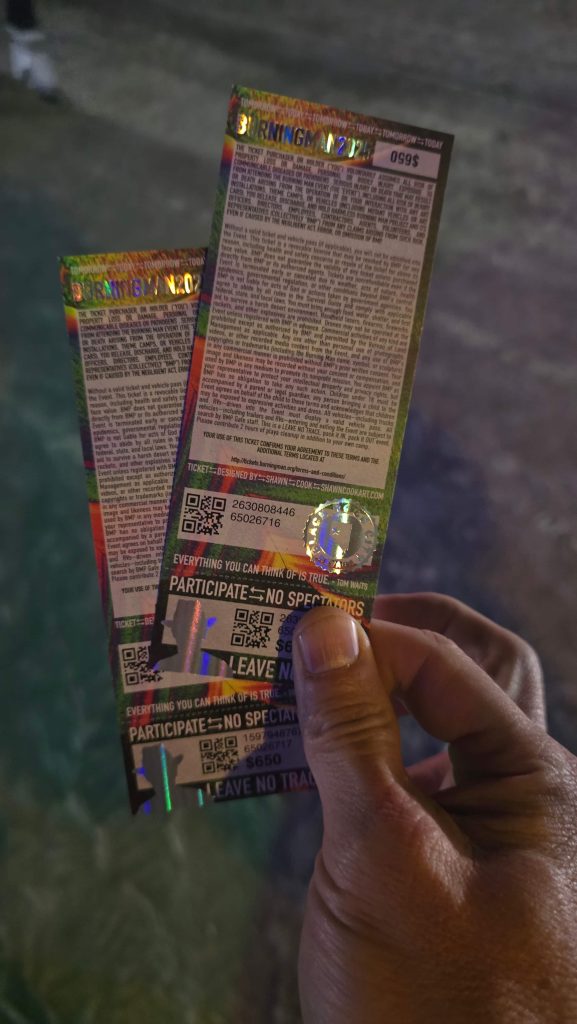
If you’re bringing a car, you’ll also need a vehicle pass. That’s separate from your event ticket, and yes — they check.
One thing I highly recommend: ship your tickets instead of using Will Call. Will Call works, but it adds time. In our case, will call pickup took us 90 minutes total. 45 min to get tickets and another 45 min in traffic to get back to security.
If you’re driving cross-country like I did, build buffer time into your schedule. Don’t plan to arrive at the gate already exhausted and on a tight timeline. Things take longer than you expect — both on the road and at entry.
If you don’t have your ticket and vehicle pass secured, nothing else matters. Start there.
Getting There: Road Trip Logistics & Final Supply Stops
For me, this started with a 3,000-mile drive from the East Coast. That alone changes how you plan. You’re not just packing for a festival — you’re packing for a cross-country road trip and a week in the desert.
We made it work with a small car, but only because we used a roof rack and a hitch basket. Without that extra storage, it wouldn’t have happened. If you’re not bringing an RV, maximizing space becomes part of your strategy.
We staged in Winnemucca the night before entry. It’s far enough out to avoid the immediate rush but close enough to make gate day manageable.
Our final supply stop was in Fernley. That’s where we handled everything:
- Hardware from Lowe’s
- Food and water from Walmart
- Propane refill at Big R
- Full tank of gas before heading toward the playa
Once you leave Fernley, options get limited and lines get longer.
The biggest lesson here: don’t unpack and repack multiple times. Plan your load once. Know what’s accessible and what’s buried. The less you reshuffle gear on the side of the road, the better your entry day will go.
Arrival & Camp Setup: First Night Survival
Getting through the gate can take hours. There’s no way around that. But oddly enough, it doesn’t feel stressful. People are walking around, music’s playing, conversations start with strangers — it feels more like a slow-moving pre-party than a traffic jam.
One small tip: avoid the far outside lane if you can. Wind kicks up dust along the edges, and you’ll feel it.
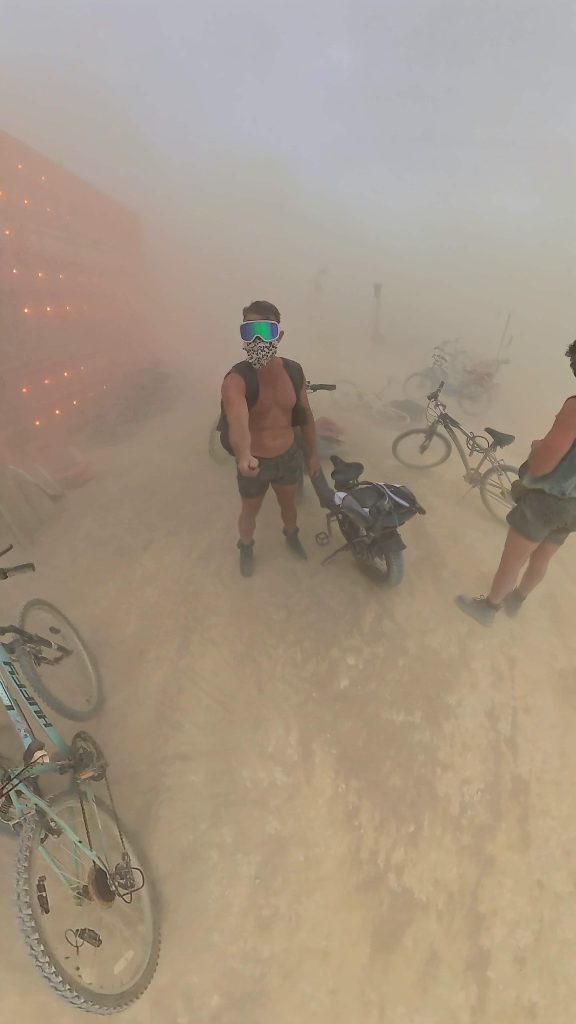
Once you’re in, remember — this isn’t a traditional campground. There are no trash cans, no hookups unless you arranged something specific, and you’re responsible for everything you bring in.
Porta potties are everywhere and surprisingly well maintained. Use them. The Leave No Trace principle is real out there, and it’s taken seriously.
If you’re doing free camping like we did, your spot is basically first come, first served. It’s a bit of a roll of the dice. Try to land close enough to a bank of porta potties to make life easier, but not so close that you’re dealing with constant foot traffic.
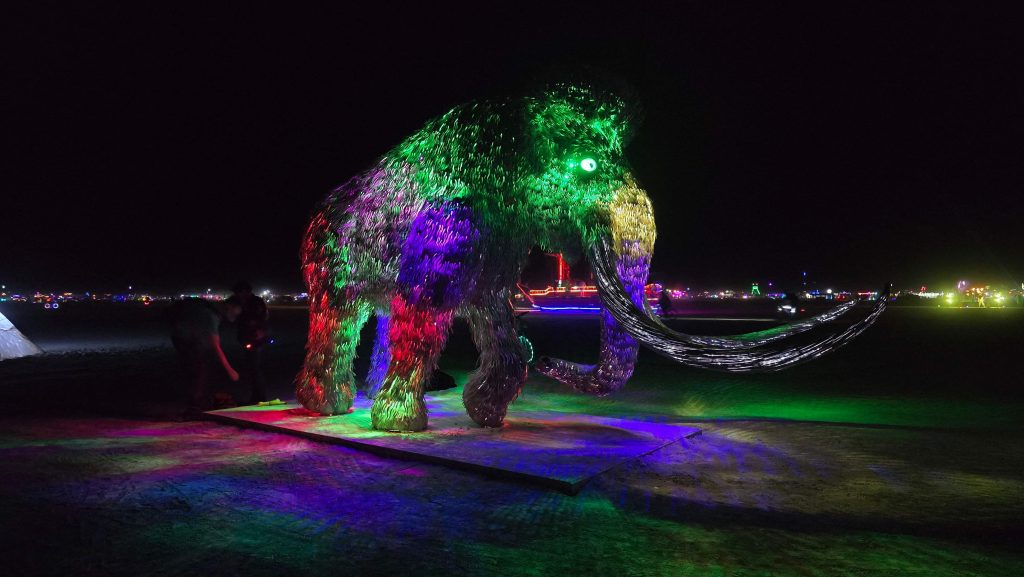
On the first night, don’t try to build the perfect camp. Set up the essentials — shade, sleep setup, basic structure — and leave the fine-tuning for the next morning. You’ll likely be arriving tired, dusty, and overstimulated.
Keep it simple so you’re not hammering lag bolts into the playa at 2AM wondering why you thought this was a good idea.
If I had to do it again, I’d pack lighter — but smarter. I created a no-fluff essentials list based on what actually worked on the playa. No overcomplicated survival gear. Just what matters.
Check out the full Burning Man packing guide here before you load the car.
What Burning Man Actually Feels Like
The biggest surprise for me was how different it feels during the day versus at night.
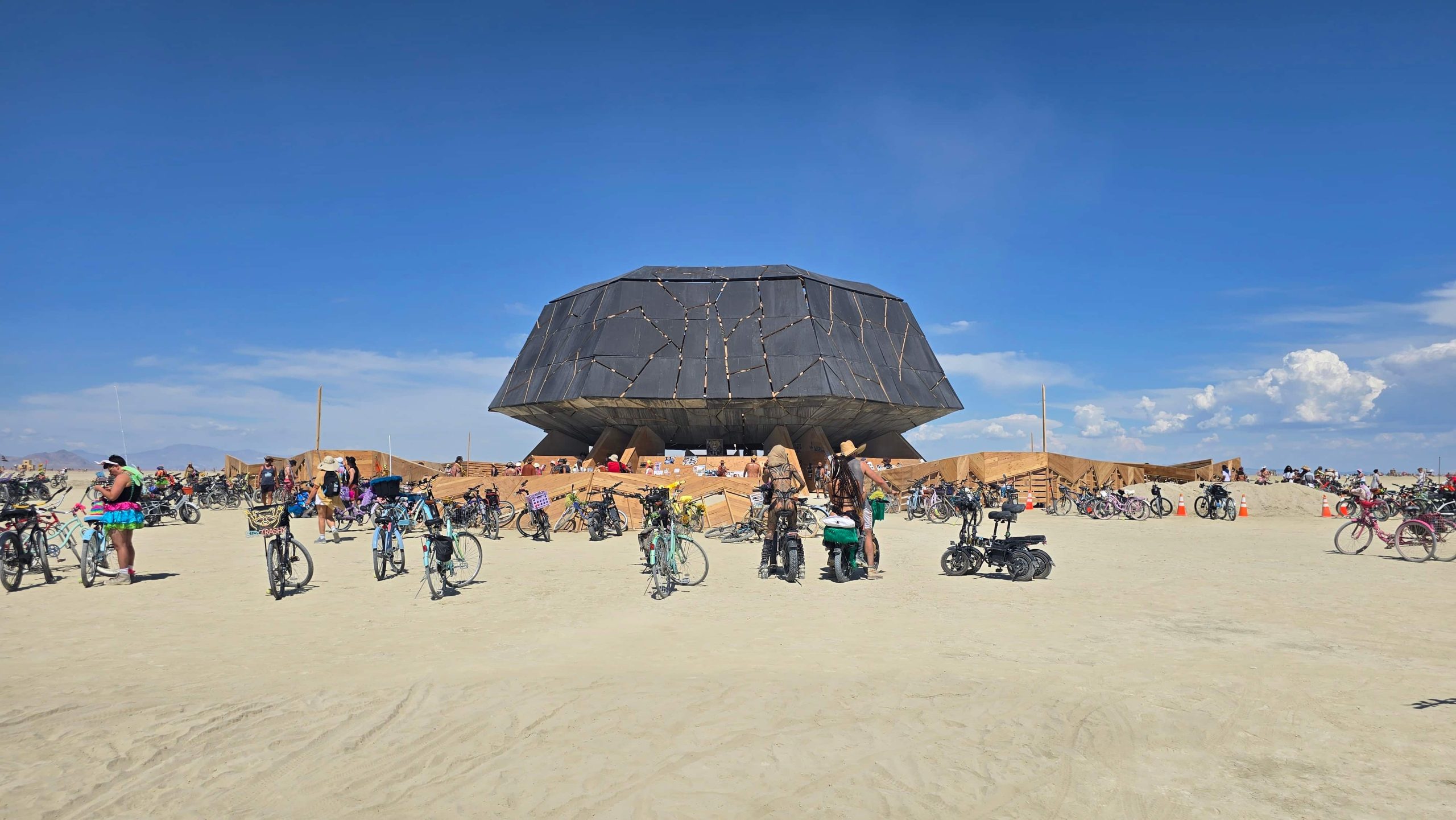
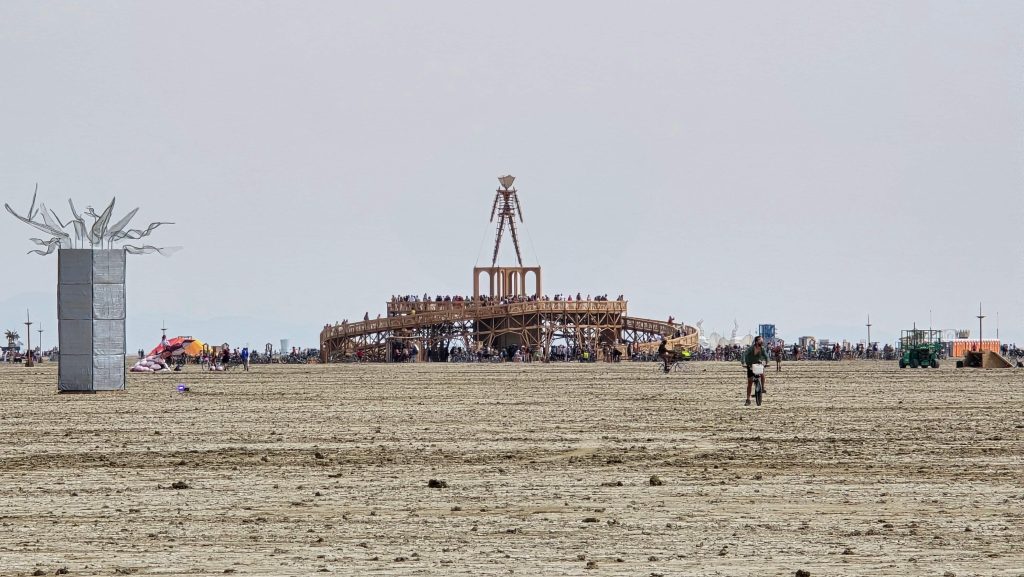
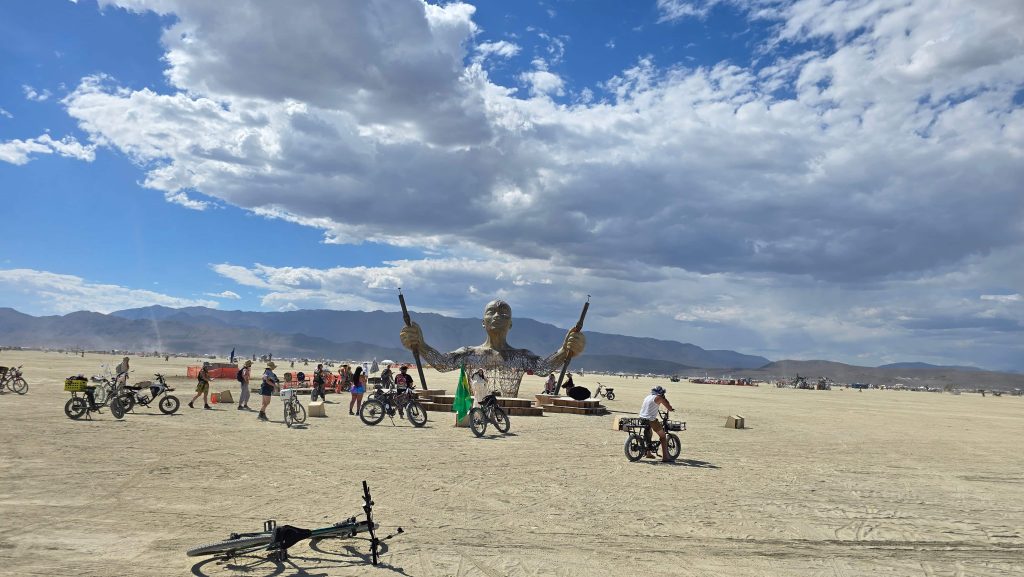
During the day, it’s bright, harsh, and wide open. You see the scale of everything — the art, the camps, the dust moving across the playa. It feels exposed. The heat is real, and the environment reminds you quickly that you’re in the desert.
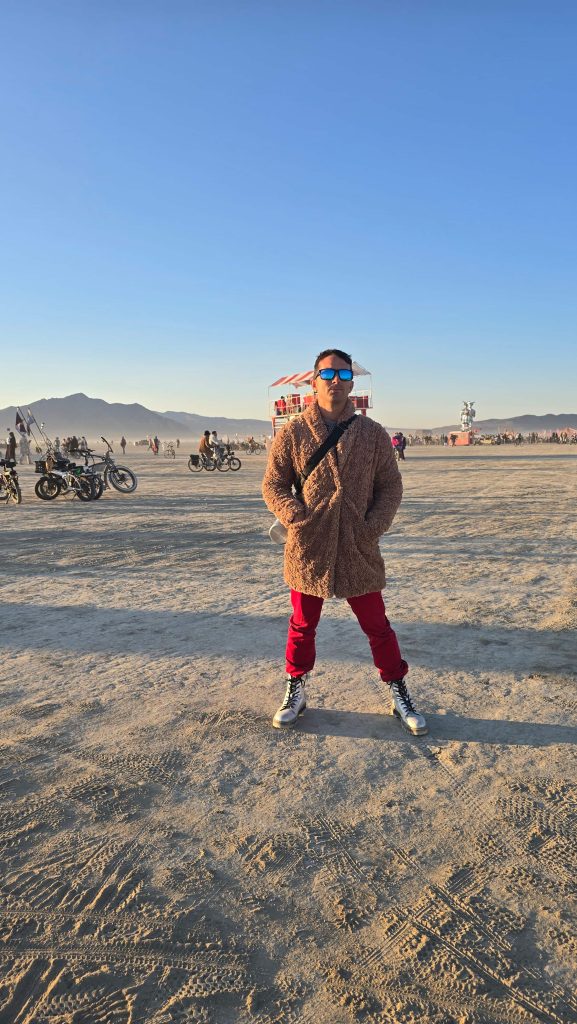
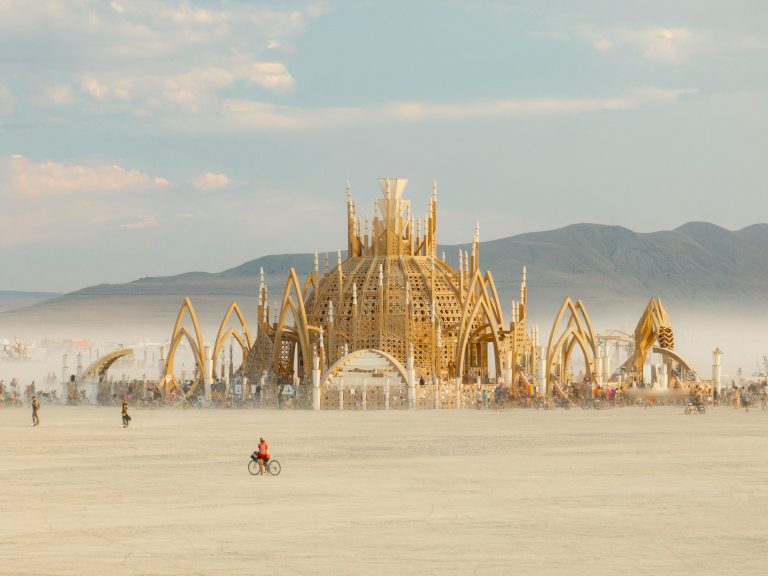
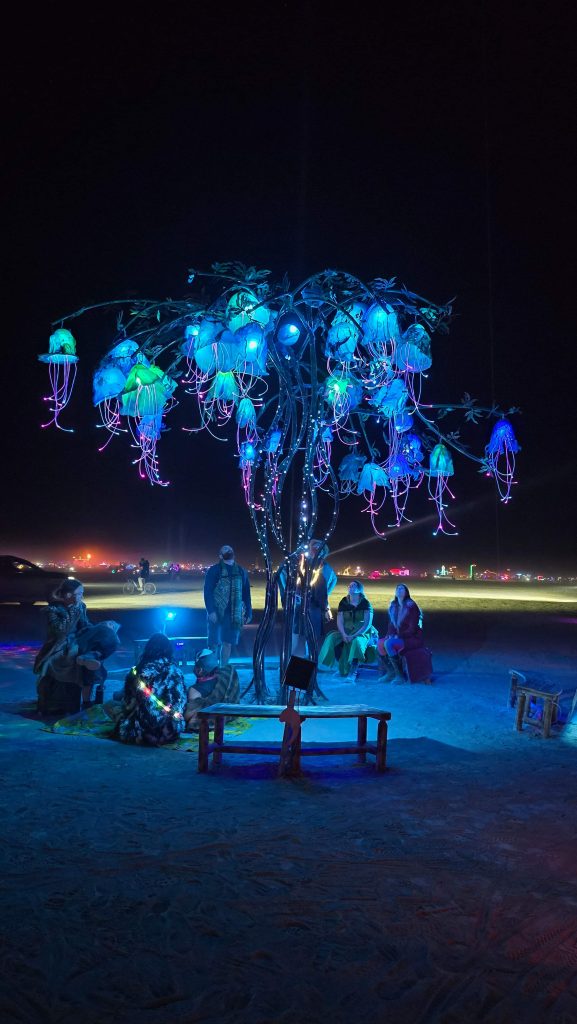
At night, it transforms completely. The city glows. Bikes light up. Art cars move across the open playa like something out of another world. It feels less like a survival environment and more like a moving, living piece of art.
The best strategy? Don’t overschedule it. Roaming aimlessly ended up being better than trying to chase specific events. Some of the best moments happened because we just turned left instead of right.
If you want to explore deep playa — where a lot of the large art installations sit — you need a bike. Walking that distance regularly isn’t realistic. And once you’re out there, you’re on your own timeline.
There are no trash cans anywhere. What you bring in, you bring out. Every cup, every wrapper, every zip tie. It’s part of the culture, and people take it seriously.
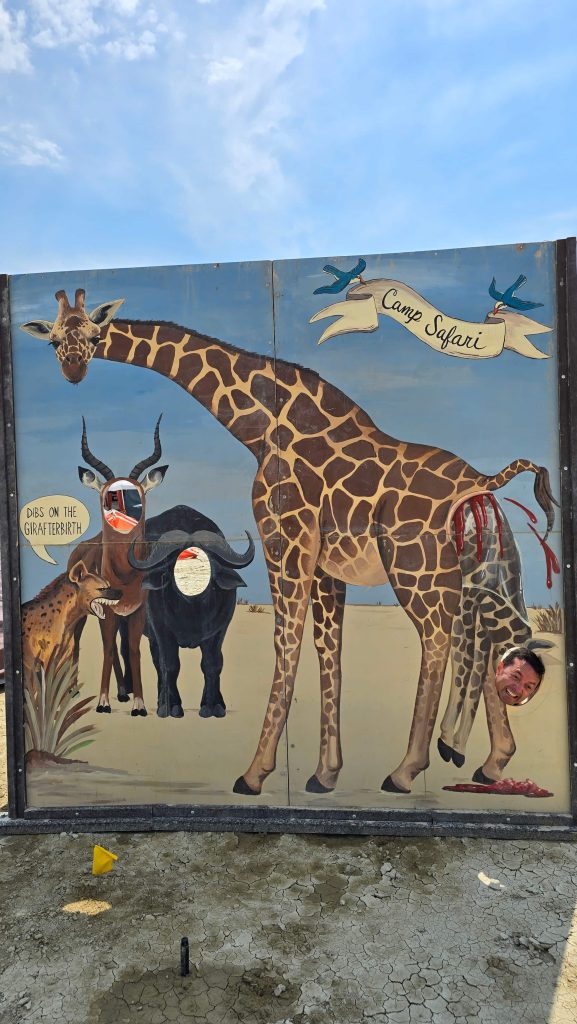
Dust storms are normal. Sometimes they’re mild. Sometimes visibility drops and you’re waiting it out with goggles on. And if it rains, the playa turns into thick clay that can completely shut down movement. Bikes stop working. Cars don’t move. You adjust.
Flexibility is everything out there. The conditions will test you. And the more you fight that, the harder it feels.
The Highlight Moments
There’s a noticeable shift around Wednesday night.
The first couple of days feel like people settling in — building camps, figuring out the layout, conserving energy. Then midweek, something changes. The city feels fully alive. More lights. More movement. More energy.
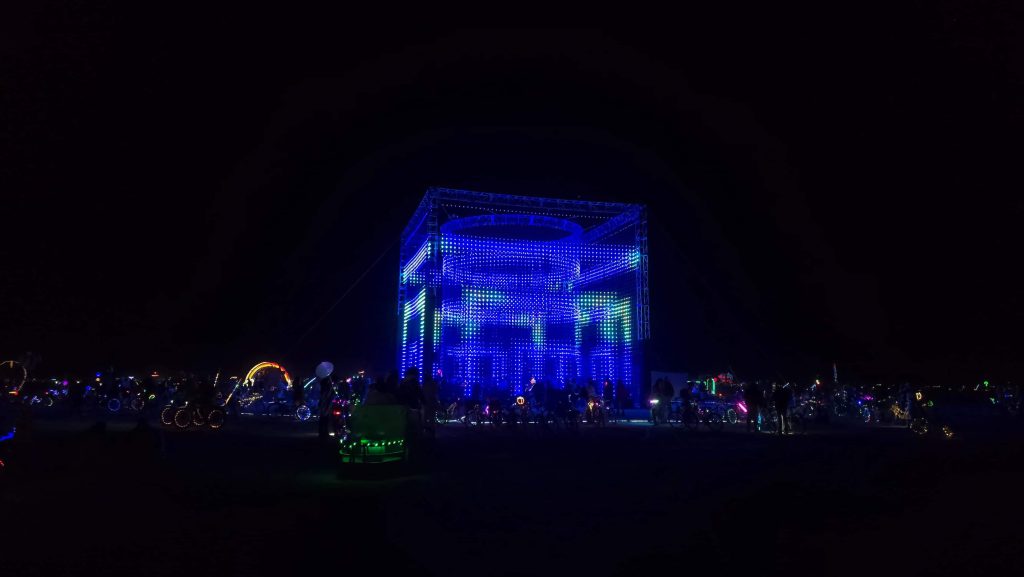
Out in deep playa at night is where it really hits. Art cars moving slowly across the open desert. Bikes lit up in every direction. Massive installations glowing in the distance. It doesn’t feel like a festival — it feels like you’re inside something that shouldn’t exist.
One of my favorite moments was a sunrise ride deep into the playa. Music playing, the sky starting to change colors, the temperature finally cooling down. At one point, RÜFÜS DU SOL was playing and it just clicked — this is why people come back.
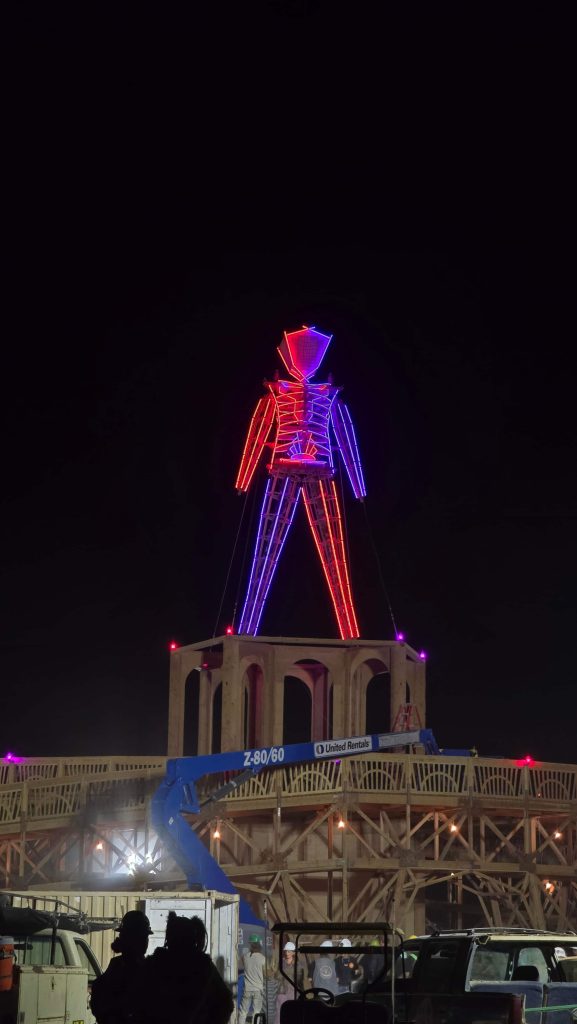
Fire Conclave is another level. The performances build anticipation, and then The Man Burn brings everyone together. When the structure finally collapses, the crowd reaction is something you feel in your chest.
Those are the moments people talk about for years. Not the dust. Not the gate line. Not the packing list.
The moments where it all comes together.
Breakdown, Exodus & What I’d Do Differently
If you take nothing else from this guide, pre-pack as much as you can before Sunday morning.
Saturday before The Man Burn is the sweet spot. Pack what you won’t need again. Collapse non-essentials. Organize trash. The more you handle early, the less painful exodus becomes.
Getting out can take time. Just like entry, it’s not instant. You’re tired, dusty, and mentally full — so anything you can do to simplify that process is worth it.
Trash drop-off fees? Worth it. After a full week in the desert, the last thing you want is hauling bags across multiple states trying to find a place to dump it.
If you have extra food or water, donate it before you leave. There are collection points, and it keeps waste down.
One thing I’d do differently next time: stay for the Temple Burn. Leaving before that felt rushed. There’s a different tone to it compared to The Man Burn — more reflective, more quiet. That’s something I’d build time for next time.
And finally, plan a decompression day before going back to normal life. Don’t go straight from the playa to work on Monday morning. Your body and your brain need a minute.
The exit can honestly feel harder than the entry. Plan it like you planned everything else.
If I had to do it again, I’d pack lighter — but smarter. I created a no-fluff essentials list based on what actually worked on the playa. No overcomplicated survival gear. Just what matters.
Check out the full Burning Man packing guide here before you load the car.
Frequently Asked Questions About Burning Man
Is Burning Man worth it for first-timers?
Absolutely, if you’re ready for a unique, immersive experience. It’s less about comfort and more about creativity, community, and self-expression. First-timers often find it life-changing, though it can be intense physically and mentally.
How much does Burning Man really cost?
Costs vary widely, but plan for $1,500–$2,500 for tickets, transportation, camping gear, and food. Extras like RV rentals, art projects, and guided experiences can push it higher. Budget carefully—there’s no free stuff on the playa.
Do you need an RV to go to Burning Man?
Not at all. Many first-timers car camp or tent camp. RVs are more convenient for comfort, shade, and a bathroom, but they’re not required.
Can you camp for free at Burning Man?
Yes, camping on the playa is included with your ticket—there are no additional campsite fees. Just be ready to bring all your own supplies, including water, shelter, and food.
How cold does it get at night?
Nighttime temperatures can drop dramatically, sometimes into the 30s–40s°F (0–5°C). Even in summer, the desert can be chilly, so pack warm layers and a good sleeping bag.
Is there cell service at Burning Man?
Cell service is very limited and unreliable. Don’t count on Wi-Fi or calls—plan to disconnect and communicate with radios or pre-arranged meeting points.
Can you buy food and ice on the playa?
The only thing you can actually buy at Burning Man is ice. Everything else runs on gifting. If you truly need food, you can ask — people will help. Some camps even give out fresh fruit and vegetables for free.
How long does it take to get in and out?
Entry can take several hours due to traffic and security checks. Exodus can be even longer, sometimes 6–10 hours, so patience helps. That said, we left at 10 AM on Sunday and were out in about 90 minutes. An early departure makes a big difference.
Let’s Wrap-It Up: Burning Man for Beginners
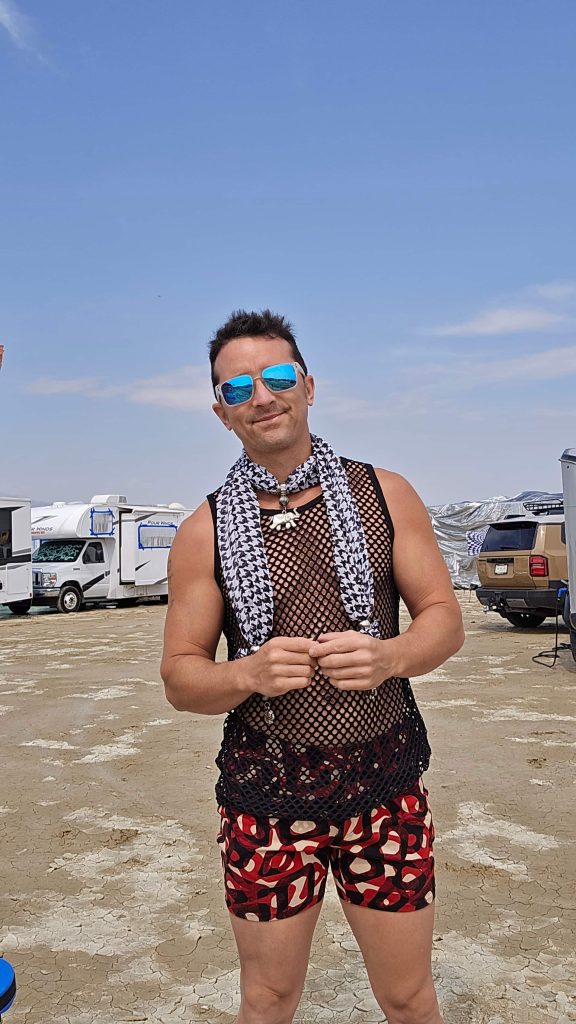
Burning Man isn’t a typical vacation — it’s a full-on experience. It will test your patience, your preparation skills, and your comfort level… but it will also expand your perspective in ways that are hard to explain until you’ve lived it.
If you’re someone who craves creativity, community, radical self-expression, and stepping outside your normal routine, your first Burning Man could be unforgettable. If you prefer structured itineraries, luxury comfort, and predictable schedules, this might feel overwhelming.
The truth? Burning Man gives back what you put into it. Come prepared. Come open-minded. Come ready to participate — not just observe.
And if you do?
There’s a very real chance you won’t just attend once… you’ll start planning your return before you’ve even left the playa. 🔥✨
If I had to do it again, I’d pack lighter — but smarter. I created a no-fluff essentials list based on what actually worked on the playa. No overcomplicated survival gear. Just what matters.
Check out the full Burning Man packing guide here before you load the car.