Burning Man Budget Guide: How Much It Actually Costs
Burning Man is not a cheap trip.
And it’s definitely not just the ticket price.
A lot of people go in thinking they’ll spend a few hundred dollars, maybe a thousand if they stretch it. That’s not how it works. By the time you factor in transportation, camping gear, food, and everything else you need to survive a full week in the desert, the cost adds up fast.
Realistically, most people end up spending somewhere between $2,500 and $4,000+. Some spend less by keeping things very basic. Others go way beyond that with RVs, upgraded camps, and gear.
The point is — there’s a big gap between what people expect to spend and what they actually spend.
This guide breaks down what Burning Man really costs, based on actual expenses, so you can plan it properly and avoid getting caught off guard.
This post may contain affiliate links. If you book or purchase through these links, we may earn a small commission at no extra cost to you. Please read our full Affiliate Disclosure for more information.
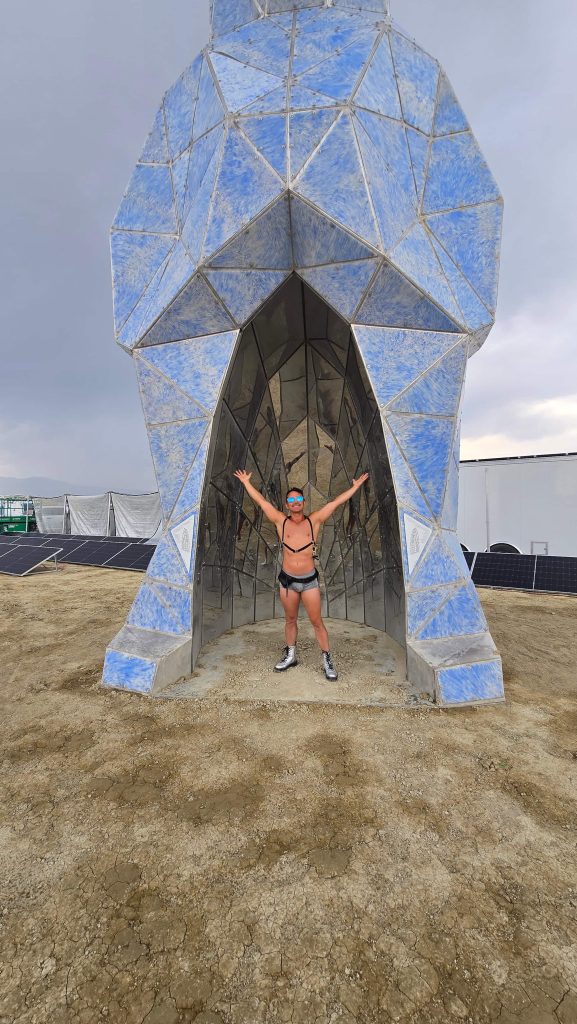
How Much Does Burning Man Cost? (Realistic Range)
Here’s the short answer.
- Bare minimum: ~$1,500
This is a very stripped-down setup. You’re sharing gear, keeping food simple, and cutting costs wherever possible. - Most people: ~$2,500–$3,500
This is where the majority of first-timers land. You’re still being mindful, but you’re not trying to do everything as cheaply as possible. - Comfortable: ~$4,000+
More flexibility, better gear, possibly higher camp dues, or even an RV setup.
If you’re trying to figure out what to budget, plan for around $3,000 per person. It’s a realistic number that gives you enough room without underestimating everything.
Ticket Price (This Is Just the Start)
The ticket is usually the first thing people look at — and it’s also what throws off expectations the most.
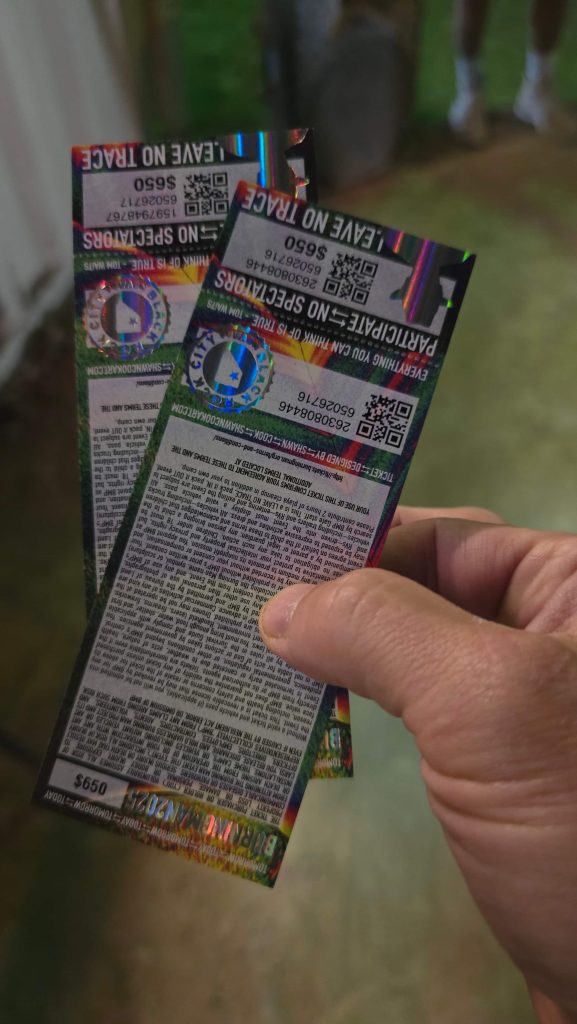
A standard Burning Man ticket typically falls in the $575 to $775 range, depending on when and how you get it. There are higher-priced tiers that can go over $1,000, but most people aren’t buying those.
On top of that, you’ll also need a vehicle pass, which is usually around $150 per car. If you’re driving in, this is not optional.
So at a minimum, you’re already looking at roughly $700–$900 just to get in.
And that’s before flights, gear, food, or anything else.
This is where people underestimate the trip. The ticket feels like the big expense, but in reality, it’s just the entry point.
Camping Setup (Where Your Money Starts Adding Up)
This is where your budget really starts to move.
You’re not booking a hotel. You’re building your own setup in the desert, and how you do that will have a huge impact on what you spend.
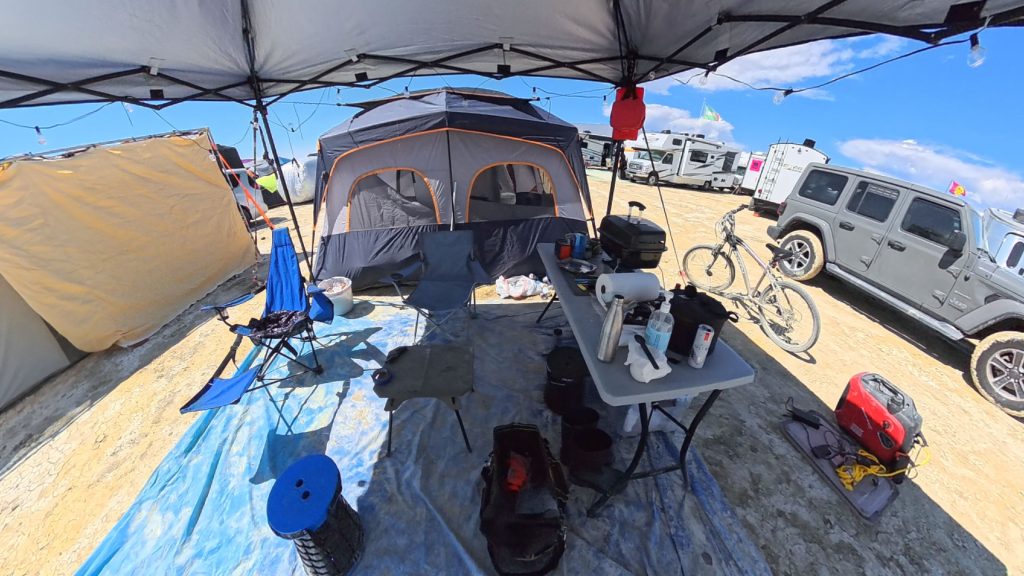
Basic Setup
- Tent
- Sleeping bag or air mattress
- Minimal shade (if any)
This is the lowest-cost way to do it, but it also means dealing with heat, dust, and less comfort overall. Most people doing this are sharing gear and keeping things as simple as possible.
Mid-Range Setup
- Better-quality tent
- Proper shade structure
- Shared camp infrastructure
- Camp dues (usually around $300–$600)
This is where most people land. You’ll have a more reliable setup, access to shared resources, and a better overall experience without going overboard.
RV Setup
- RV rental: $2,000+
- Generator, fuel, and pump-outs
This is the most comfortable option, but it adds up fast. Between rental costs and everything needed to keep it running in the desert, it’s a major jump in budget.
This is where people either keep things reasonable… or blow their entire budget.
Food, Water, and Gear (What You Actually Need to Survive)
This is everything people underestimate the most — because Burning Man doesn’t provide anything. No vendors. No stores. No, “just buy it when you get there.”
You bring everything you need to survive the week. Packing is quite stressful.
Food, Water, and Basics
- You need to bring all your own water (a lot more than you think)
- Easy, no-cook meals work best
- Ice for anything perishable or just to stay sane in the heat
Typical spend: ~$150–$400+
If you forget something, there’s no quick fix. You either planned for it, or you go without.
Gear, Clothing, and Essentials
- Goggles and dust masks (dust storms will hit)
- Lights (it gets completely dark at night)
- Bike (you will use it constantly)
- Clothing and outfits for extreme conditions — hot days, cold nights, dust
Typical spend: ~$300–$1,000+
You can keep this very minimal, or you can turn it into a full costume situation. Most people end up spending more here than they expected, especially on last-minute gear and “Burning Man stuff.”
Camp Fees, Shared Costs, and Hidden Expenses
If you join a theme camp, you’ll usually pay around $300–$600, depending on the setup and how organized the camp is. Some camps are very basic with just shared space and essentials. Others are more built-out and feel almost like a full operation, with structured meals, better infrastructure, and more comfort.
What this fee typically covers:
- Shared meals
- Shade structures
- Kitchen setup and basic power
- General camp infrastructure
But the camp fee is only part of the picture.
There are also a bunch of hidden costs that people don’t really think about until they’re already committed:
- Hotels before or after the event (usually in Reno or Vegas)
- Last-minute gear runs before heading into the desert
- Bike repairs or replacing a bike entirely
- RV cleaning fees from dust damage
- Extra baggage or gear transport costs
- Post-Burn recovery (food, rest, and just catching up afterward)
These are the expenses that don’t feel obvious when you’re planning, but they add up fast in real life.
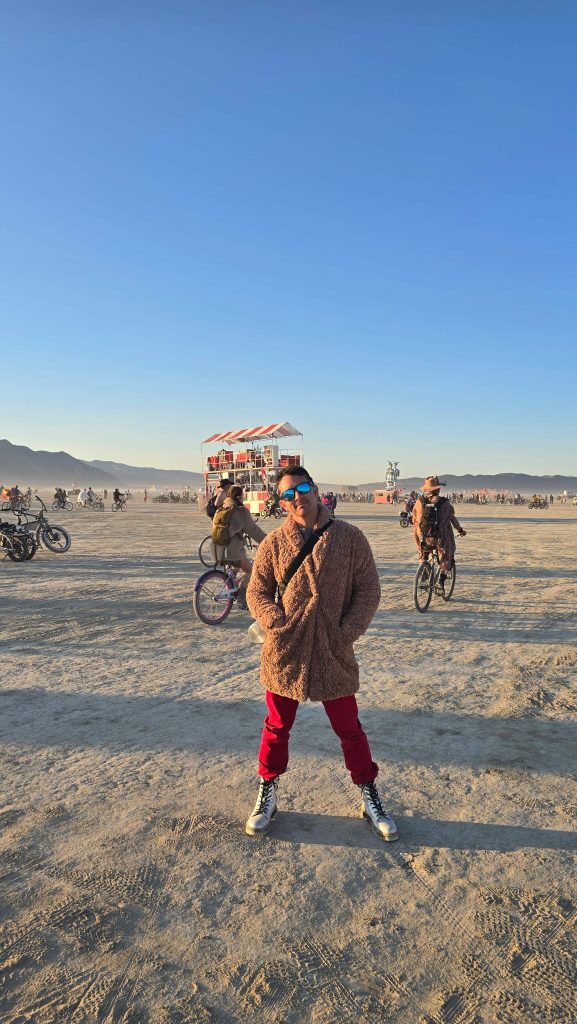
How to Save Money and Final Thoughts
There are ways to keep Burning Man costs under control, but only to a point. It’s still a full-week experience in the middle of the desert, so most of your budget is going to come from basic survival logistics, not optional extras.
The biggest savings usually come from:
- Sharing gear instead of buying everything yourself
- Carpooling to split transportation costs
- Joining a camp instead of building a full setup solo
- Not overbuying outfits and “Burning Man-specific” items
- Planning early so you’re not paying last-minute prices for gear or travel
If you do those things, you can keep things closer to the lower end of the budget range. If you don’t, costs tend to climb fast without you really noticing.
Final reality check:
Most people underestimate the trip the first time they go. Not because they’re careless, but because there are a lot of small costs that only make sense once you’ve actually been.
So plan for more than you think you’ll need. It doesn’t just make it easier financially — it also makes the whole experience a lot smoother once you’re out there.